Chapter 01
Cloud Computing
Describe what is Cloud Computing:
Cloud Computing is the delivery of computing services over the Internet, enabling faster innovation, flexible resources, and economies of scale.
Key Components:
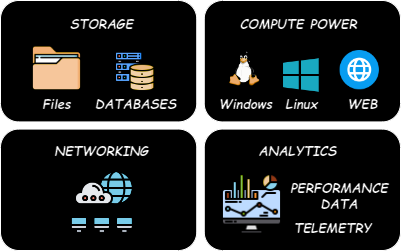
- COMPUTE: Provides the compute power, including memory and processor resources.
- NETWORKING: Involves the connection of computers or virtual machines (VMs) together.
- STORAGE: Responsible for storing data and information.
- ANALYTICS: Handles important tasks such as determining memory requirements, performance metrics, etc.
Scalability
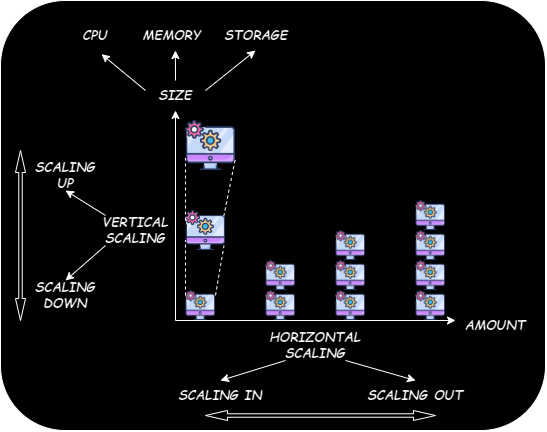
Scalability is the ability to scale. Scaling is the process of allocating (adding) or deallocating (removing) resources.
Two Types of Scalability:
-
Vertical Scaling (Scale Up/Down): - Increases or decreases the compute entity, such as RAM and processor power.
-
Horizontal Scaling (Scale Out/In):- If one virtual machine (VM) is heavily utilized, traffic is shifted to another VM. This is managed by a load balancer.
Elasticity
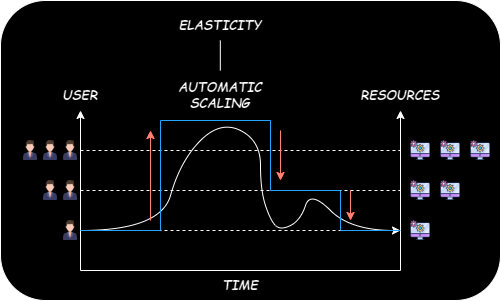
Elasticity is the ability to scale dynamically
Agility
Agility is the ability to react quickly, especially when it comes to scaling resources.
Key Points:
- Agility refers to on-demand services that allow for the fast deployment of virtual machines (VMs).
- It involves using a control panel or portal to manage and adjust properties quickly and efficiently.
Fault Tolerance
Fault tolerance is the ability to maintain system uptime even when physical or service component failures occur.
Disaster Recovery
Disaster recovery is the process and design principle that allows a system to recover from natural or human-induced disasters. This involves replicating data to another location to ensure easy recovery during disasters. Disaster recovery is a critical part of maintaining high availability.
High Availability
High availability refers to the agreed level of operational uptime for a system, calculated as a percentage of system uptime versus the total lifetime of the system.
- Availability Formula: Availability = Uptime / (Uptime + Downtime)
Consumption-Based Model
The consumption-based model is a pricing model where users pay based on their actual usage of resources, often referred to as "pay-as-you-go."
Cost Optimization
Cost optimization involves optimizing both Capital Expenditure (CapEx) and Operational Expenditure (OpEx) to achieve financial efficiency and reduce unnecessary costs.
Global Reach
Global reach refers to the availability of data centers across the globe, ensuring accessibility, redundancy, and disaster recovery capabilities.
Security
Security involves measures and protocols that ensure secure access to and use of applications, protecting data, infrastructure, and users.