Chapter 5
IaaS, PaaS, SaaS and their differences
components
Here are the key components of software required to work effectively:
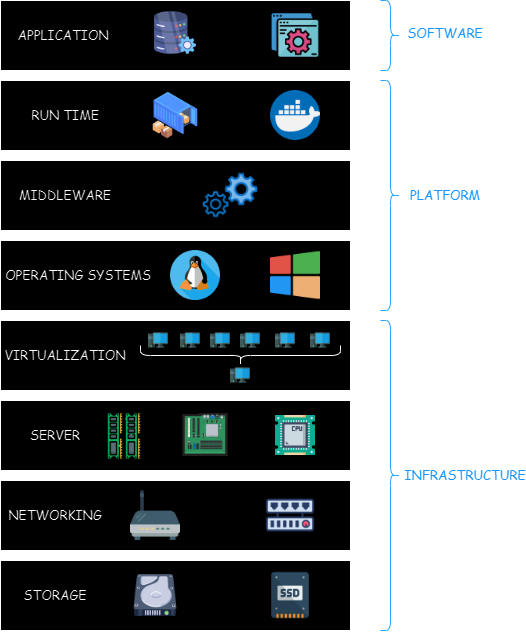
On-Premises
On-premises refers to a computing model where all hardware, software, and resources are hosted and managed within the organization's physical premises. This traditional approach provides complete control but requires significant investment in infrastructure and maintenance.
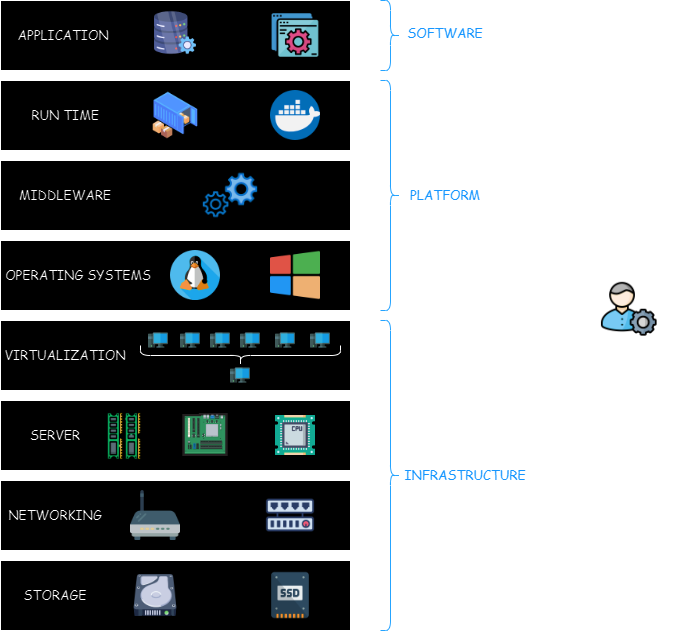
Describe Infrastructure-as-a-Service (IaaS)
Infrastructure-as-a-Service (IaaS) provides virtualized computing resources over the internet. It offers businesses the flexibility to rent IT infrastructure such as servers, storage, and networking. Users are responsible for managing operating systems, applications, and other software.
Key Features of IaaS:
- Scalability: Resources can be scaled up or down based on demand.
- Cost-effective: Pay-as-you-go pricing eliminates upfront hardware costs.
- Control: Provides significant control over your infrastructure.
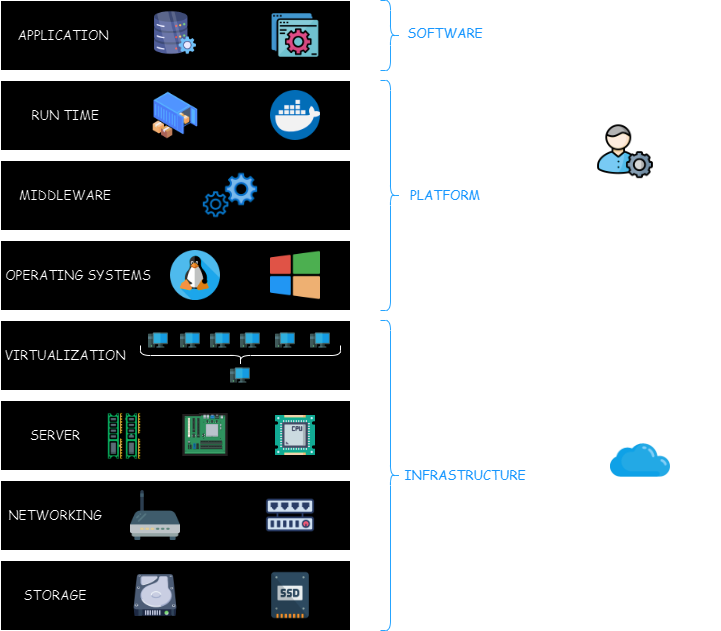
Describe Platform-as-a-Service (PaaS)
Platform-as-a-Service (PaaS) is a cloud computing model that delivers hardware and software tools needed for application development. It simplifies the process of developing and deploying applications by abstracting infrastructure management.
Key Features of PaaS:
- Development Focus: Developers can concentrate on application coding without worrying about infrastructure.
- Pre-built Components: Includes tools for testing, development, and deployment.
- Flexibility: Supports multiple programming languages and frameworks.
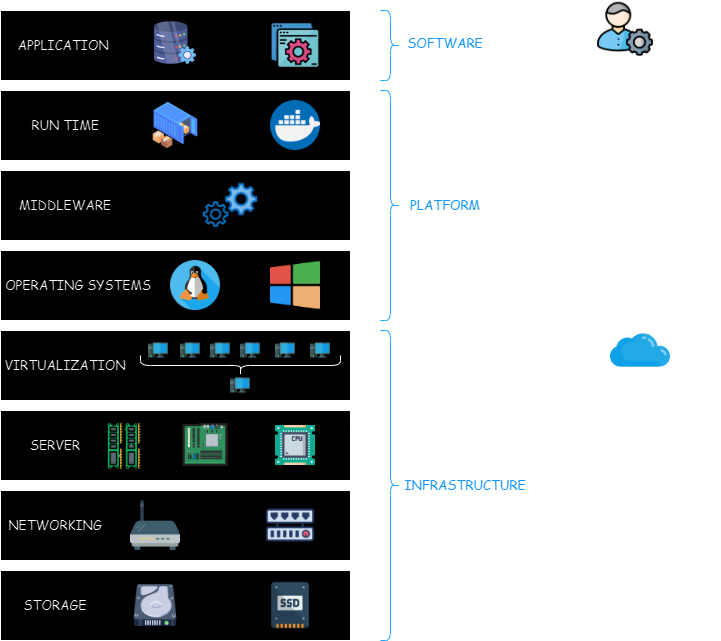
Describe Software-as-a-Service (SaaS)
Software-as-a-Service (SaaS) delivers software applications over the internet on a subscription basis. Users access software through a web browser, without the need for installation or maintenance.
Key Features of SaaS:
- Ease of Use: Applications are ready-to-use upon subscription.
- Accessibility: Can be accessed from any device with an internet connection.
- Automatic Updates: Providers handle updates and maintenance.
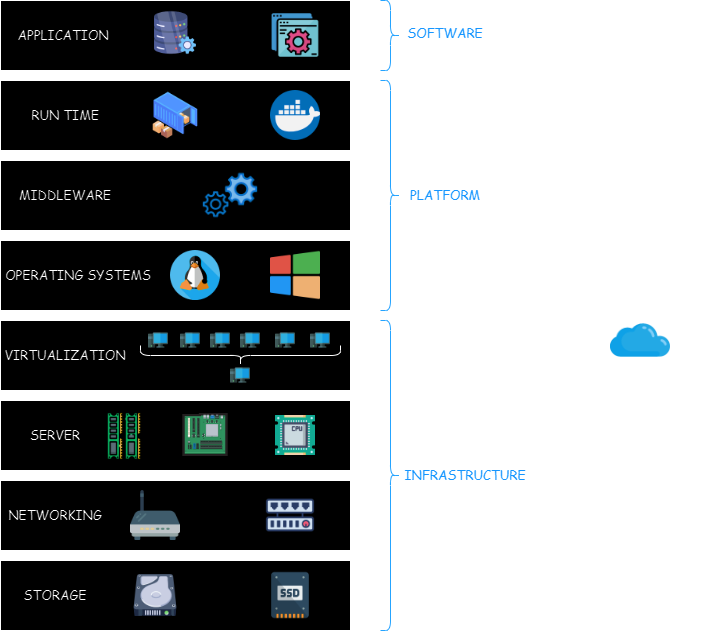
Compare and Contrast the Three Service Types
IaaS vs. PaaS vs. SaaS
| Aspect | IaaS | PaaS | SaaS |
|---|---|---|---|
| Definition | Virtualized computing resources. | Development platforms and tools. | Software delivered over the web. |
| Management | Users manage OS and applications. | Providers manage infrastructure; users handle applications. | Providers handle everything. |
| Use Case | Hosting, storage, and computing. | Application development. | End-user software needs. |
| Control | High | Medium | Low |
| Examples | AWS EC2, Google Compute Engine. | AWS Elastic Beanstalk, Heroku. | Gmail, Salesforce. |
Summary
By understanding IaaS, PaaS, and SaaS, businesses can select the cloud computing model that best aligns with their needs. The SPI model illustrates how these services interconnect to create a robust infrastructure for modern applications.